

Key Takeaways
-
Waste removal starts with a vacuum truck and waste extraction hose to empty the holding tank safely and efficiently.
-
Sanitation technicians follow strict waste management protocols and service each unit weekly, or more depending on usage
-
After pumping, waste is transported to a certified wastewater treatment facility or septic disposal site for proper disposal.
-
Units are deep-cleaned using disinfectant application, enzyme treatments, and manual scrubbing to meet hygiene standards.
-
Each portable toilet is restocked with a freshwater refill, chemical solution, and supplies—ensuring it’s ready for the next user.
-
The entire process is regulated by waste disposal regulations and upheld by trained sanitation pros for public health and safety.
We've all seen them, we've all used them, but have you every thought to yourself, how do porta potties get emptied?
Understanding How Porta Potties Get Emptied: A Look into How Portable Toilets Work
Let me break it down for you—because once you know what’s going on inside a porta potty, the rest of the service process makes a lot more sense.
Porta potties play an important role in maintaining sanitation at outdoor events, large events, and construction projects, ensuring proper waste management and cleanliness for big crowds and workers alike. They provide convenient access to sanitation for guests and workers at these events and sites, making it easier to maintain hygiene and comfort in places where traditional washrooms are unavailable.
Portable Potty Components
At the heart of every portable toilet is the waste holding tank. That’s the big container under the seat where all the waste goes. Modern porta potties (like the ones we supply) often feature a flushing mechanism, allowing users to flush after use, making the experience more like a traditional toilet and improving hygiene.
Now, before anything hits the tank, we fill it with a chemical solution—you’ve probably seen it. The chemicals inside the tank include a mixture of blue dye, odour neutralizer, biocides, and enzymes. These chemicals are designed to control odour, prevent bacterial growth, and aid in waste decomposition, ensuring effective sanitation. That bright blue dye isn’t just for show. It masks the look of the waste and helps fight off odours. As the tank fills with waste, the blue chemicals turn green. That colour change is your clue your porta potty is getting full and the chemical’s effectiveness has been depleted.
We also use enzyme treatments in high-traffic units. These little helpers break down solid waste faster and help with odour control. When you’ve got 50 people using the same porta potty at an event? You need all the help you can get.
Inside, key features like the toilet seat and urinals are regularly cleaned and sanitized to maintain hygiene, along with other surfaces.
Holding Tank Capacity and Waste Volume
As for size—most standard portable toilets hold several gallons of waste, typically between 60 to 70 gallons. On a busy construction site, that can fill up in just a couple of days. Only about 5 percent of the waste volume is solid matter, which is separated and treated during disposal.
I’ve cleaned out thousands of these tanks, and trust me—when the system works, it really works. It’s a small space doing a big job.

So...How Do Porta Potties Get Cleaned? - the Servicing Process
If the holding tank is the stomach of the porta potty, then our crew? We’re the digestive system. Weird analogy, I know—but stick with me.
Rental companies offer a wide range of services, including regular maintenance, emergency servicing, waste disposal, and sanitation services to ensure portable toilets remain clean and functional. Renting or rent of portable toilets is common for events and construction projects, and selecting the right service package is crucial for each construction project to meet specific needs and maintain hygiene.
The Emptying Process
Once that tank fills up (remember the blue dye turning green?), it’s our cue to jump into action. We roll up in a tanker truck—a beast of a vehicle designed for waste transport, equipped with a high-power pump and a long, flexible waste extraction hose. The hose is securely attached to the tank and connected to the tanker truck, with the other end leading to the truck's waste compartment. We flip a switch, and—slurp—everything gets sucked into the truck’s sealed tank.
This isn’t guesswork. We provide regular maintenance every week for standard monthly rentals. Always check how often your rental company will clean your portable toilet before moving forward! However, a busy, downtown construction site might see their portable toilets getting dirtier faster. That means they need to up their servicing frequency, or get some more porta potties to help spread out the load. A large outdoor event may need cleanings every day. We always suggest factoring in how often your portable toilet will need maintenance to your budget, because no one wants a porta potty overflowing.
Now, let’s talk waste containment and pumping. After the suction’s done, we check for any leftover sludge at the bottom of the tank. If it’s stubborn, we pump in a bit of water and go again. Once empty, the holding tank is fully evacuated, wiped down, and sealed up tight. Nothing gets left behind. The collected waste is then disposed of at a treatment facility, where it may be directed into a screened box to separate solids from liquids, ensuring proper sanitation and environmental safety.
Waste Management System
And where does the poop go? Great question. It ends up at specialized treatment facilities, such as a wastewater treatment facility, septic disposal site, or waste treatment plant, depending on the area. Portable toilets are essential for locations not connected to a public sewer system, making them crucial for remote sites and events. Toronto’s got strict rules on this stuff. Human waste disposal is not the area where you want to bend the rules. If you’re doing it, do it right.
So yeah, it’s dirty work. But it’s done clean.
Cleaning and Sanitizing Procedures
Once we’ve hauled away the porta potty waste, the real magic begins. I like to say: you can empty a porta potty, but that doesn’t make it clean. Think of it like taking out the trash at home—you wouldn’t leave the bin sticky and smelly, right? Same idea here, just… on a bigger scale.
Our sanitation technician steps in like a one-person pit crew. We start by scrubbing away the debris—every wall, corner, and surface gets cleaned by hand. No shortcuts. Mud, graffiti, mystery gunk, and muddy footprints—we’ve seen it all. We use brushes, gloves, elbow grease, and a bit of grit. This is where portable toilet cleaning really earns its name.
After scrubbing, we rinse all surfaces thoroughly with fresh water to ensure every area is clean and free from residue.
Once everything’s scrubbed down, it’s time for disinfectant application. Our sanitation workers spray every surface inside the porta potty with a hospital-grade solution—door handles, seat, urinal, walls, the floor. It’s not just about smell; it’s about killing bacteria, preventing contamination, and making sure that the next person who steps in feels safe (and doesn’t gag).
And let’s talk odour control—because that’s the deal-breaker. We add a fresh batch of chemical solution, usually a blend that includes enzyme treatment to break down any odour causing bacteria left behind. These enzymes work overtime, especially in warm weather.
After all cleaning and disinfecting steps, the unit is fully sanitized before being put back into service.
You’d be surprised how fresh a porta potty can smell when it’s cleaned right. People often say, “This doesn’t even smell bad!” That’s the goal. We don’t just want it empty—we want it ready for the next guest, with zero hesitation.
Refilling and Restocking the Porta Potty
Once the scrubbing’s done and the scent of lemony disinfectant is in the air, we’re not packing up just yet. A clean porta potty without supplies is like a sandwich with no filling—technically complete, but definitely disappointing.
So here comes the final act: refilling and restocking the porta potty restroom.
First, we handle the freshwater refill and blue dye replenishment. Our sanitation workers top up the freshwater reservoir—usually the hand wash station or sink if the unit has one. Clean water does more than just rinse hands—it shows people the porta potty restroom is cared for. Then we pour in a fresh dose of that unmistakable blue dye. It’s a visual cue that says, “Yes, this porta potty is ready to roll.” If it’s blue, it’s clean. If it’s green… well, there’s an issue. You always want your service day to happen just before it gets too gross!
Next up: re-stocking supplies. We check every nook for the basics—toilet paper, hand sanitizer, paper towels and sometimes soap if the unit is equipped for it. Ever been inside a porta potty restroom with no supplies? Brutal. That’s why we never skip this step. We also monitor usage patterns and adjust the restock based on the event or site. A one-day music festival burns through way more supplies than a small landscaping job.
Finally, there’s the behind-the-scenes part: storing and resupplying. We run a tight ship with our mobile trucks stocked and ready. If we’re onsite for multi-day jobs, we plan resupplies in advance. If we’re offsite, we’ve got a system at our depot that keeps everything—from sanitizer to gloves—ready for the next job. No guessing. No last-minute panic.
By providing a clean, well-stocked restroom with all the necessary supplies, we ensure happy customers who appreciate the convenience and hygiene at every event or job site.
So by the time we shut that door and drive off, the porta potty isn’t just serviced. It’s reset, refreshed, and ready for the next customer to step in like it’s the first time. That’s the OneTwo Stop standard.
Check out this video to see the whole cleaning process from start to finish!
Human Waste Regulations and Safety Standards
Once your portable toilet is clean, stocked, and locked, you might think our job’s done. But here’s the thing—clean isn’t enough. In this industry, there’s a whole other layer that matters just as much: compliance. Because when you’re dealing with human waste, public health isn’t optional—it’s non-negotiable.
Modern portable toilets represent a significant advancement over traditional outhouses, which were fixed outdoor sanitation structures used before the advent of indoor plumbing. Unlike outhouses or conventional restroom facilities, portable toilets are self-contained and do not require plumbing, making them ideal for remote or temporary locations where water supply and sewage connections aren’t available.
Let’s start with waste disposal regulations. In Toronto—and really, across Ontario—sanitary waste handling has to meet strict guidelines. We can’t just dump porta potty waste anywhere. Every drop we collect is tracked and transported to approved facilities, whether it’s a wastewater treatment plant, septic disposal site, or another certified location.
Now, beyond the dump sites, there’s the day-to-day grind of portable toilet maintenance protocols. We follow a tight schedule of portable toilet servicing that keeps porta potties in rotation safe, fresh, and up to code. That means cleaning, pumping, inspecting for damage, and even checking things like door locks and ventilation. You’d be surprised how often that kind of detail makes or breaks a user’s experience.
And all of this only works because of the people behind it—our sanitation workers. Every tech at OneTwo Stop is trained, certified, and knows their stuff. It’s not just a job; it’s a sanitation service that goes beyond simple cleaning to ensure compliance, safety, and public health.
We’re not just in the business of porta potties—we’re part of Toronto’s public health system. And we take that seriously, every single day.

Now You Can Answer the Question - How Are Portable Toilets Emptied?
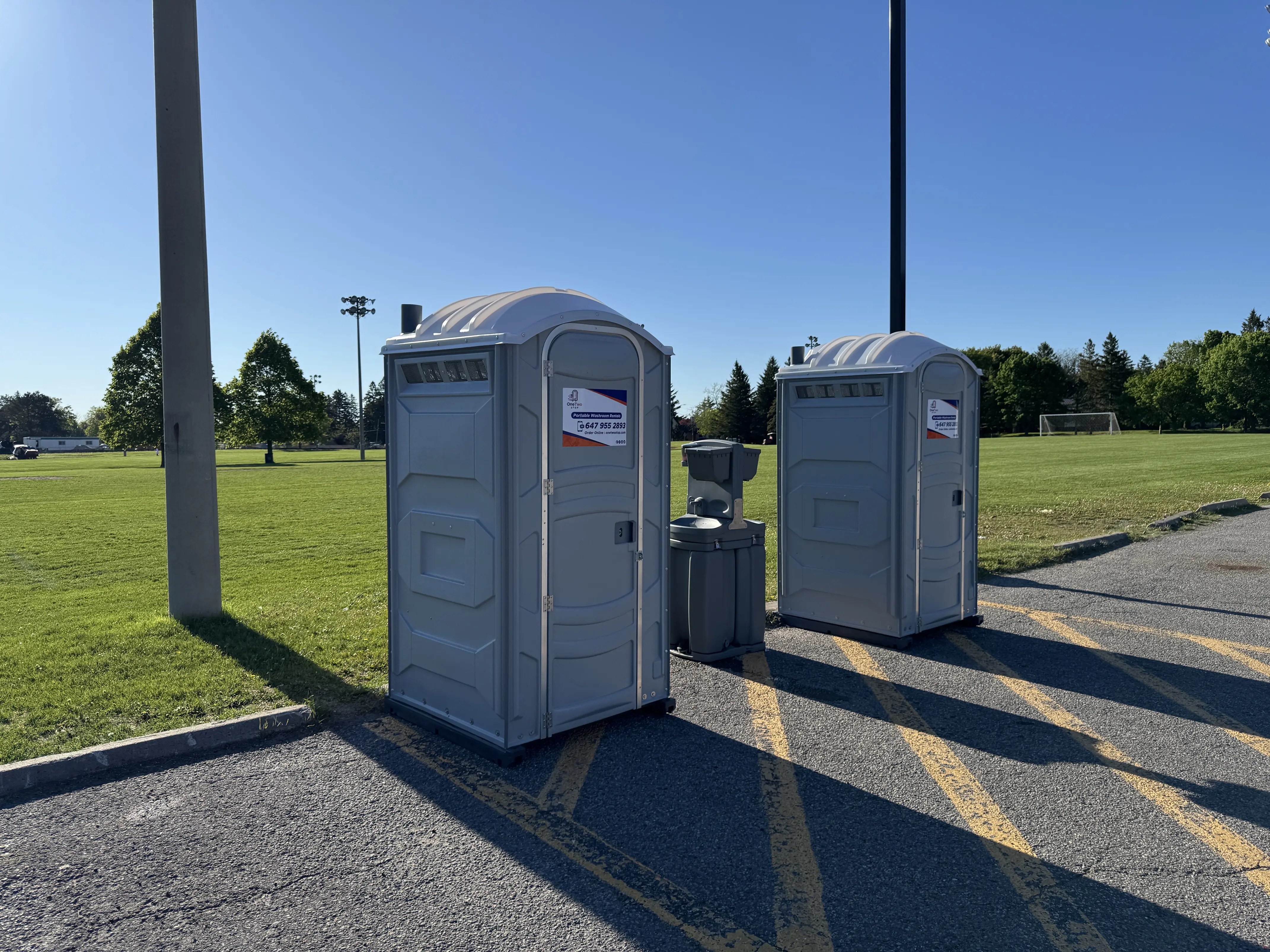
So there you have it—from the moment porta potty waste hits the tank to the second it’s safely disposed of, every step in this process is dialed in. What seems like a simple grey box at the edge of a job site or festival? That’s actually a finely tuned system built on experience, rules, and a whole lot of elbow grease.
Let’s recap.
First, the waste removal process: we roll up with a vacuum truck, hook up the hose, and empty the holding tank. Then comes the deep clean—our sanitation workers scrub every surface, apply disinfectant, and hit it with serious odour control measures. After that, we refill the freshwater, top up the blue dye, and restock the essentials like toilet paper and sanitizer.
And we don’t just dump the porta potty waste anywhere. Following strict waste management protocols, we haul everything to an approved wastewater treatment facility or septic disposal site. Every part of the journey is tracked and compliant with local regulations.
This whole system only works because of solid portable toilet maintenance routines and the dedication of trained professionals. At OneTwo Stop, we’re proud of the work we do—not just because it’s clean, but because it’s responsible.
So the next time you step into a porta potty that smells surprisingly fresh and feels totally usable? Now you know why. It didn’t just happen. We made it happen.
A vacuum truck and a waste extraction hose are used to remove waste from the waste holding tank. The waste is pumped out and transported to a licensed wastewater treatment facility or septic disposal site, following strict waste management protocols.
Service frequency depends on usage and event size. Most units need portable toilet servicing at least once a week. High-traffic sites may require daily servicing to maintain sanitation standards, replenish supplies, and manage holding tank capacity.
After waste tank pumping, the contents are transported in a waste disposal truck to a wastewater treatment plant or septic disposal site. The process follows waste disposal regulations and ensures sanitary waste handling for public safety and environmental compliance.
Sanitation technicians perform portable restroom cleaning using disinfectant application and enzyme treatment. This removes biohazard waste and controls odour. Surfaces are scrubbed manually to ensure hygiene before fresh supplies and chemical solutions are added.
A chemical solution containing blue dye, odour control agents, and enzyme treatment is added to the waste holding tank. These control bacteria, reduce odorus, and give a visual cue of cleanliness. The mixture also aids in breaking down waste for easier removal.

About The Author
Brad Anderson is a seasoned expert in the porta potty industry with over 6 years of hands-on experience. He is the co-founder of OneTwo Stop, a leading porta potty rental company based in Toronto, Ontario. He also serves on the board of OASIS, which advocates for best practices in the waste disposal and portable sanitation industries. Brad has been deeply involved in every aspect of the business—from delivery and setup to cleaning, sanitization, and maintenance. His firsthand knowledge of portable sanitation solutions makes him a trusted authority on the subject.
With a passion for providing clean, reliable, and efficient portable washrooms, Brad understands the challenges and best practices in the industry better than most. Whether it’s serving construction sites, outdoor events, or emergency situations, he knows what it takes to ensure comfort and hygiene for users. He shares his insights, tips, and expertise to help customers make informed decisions about their portable restroom needs.
