

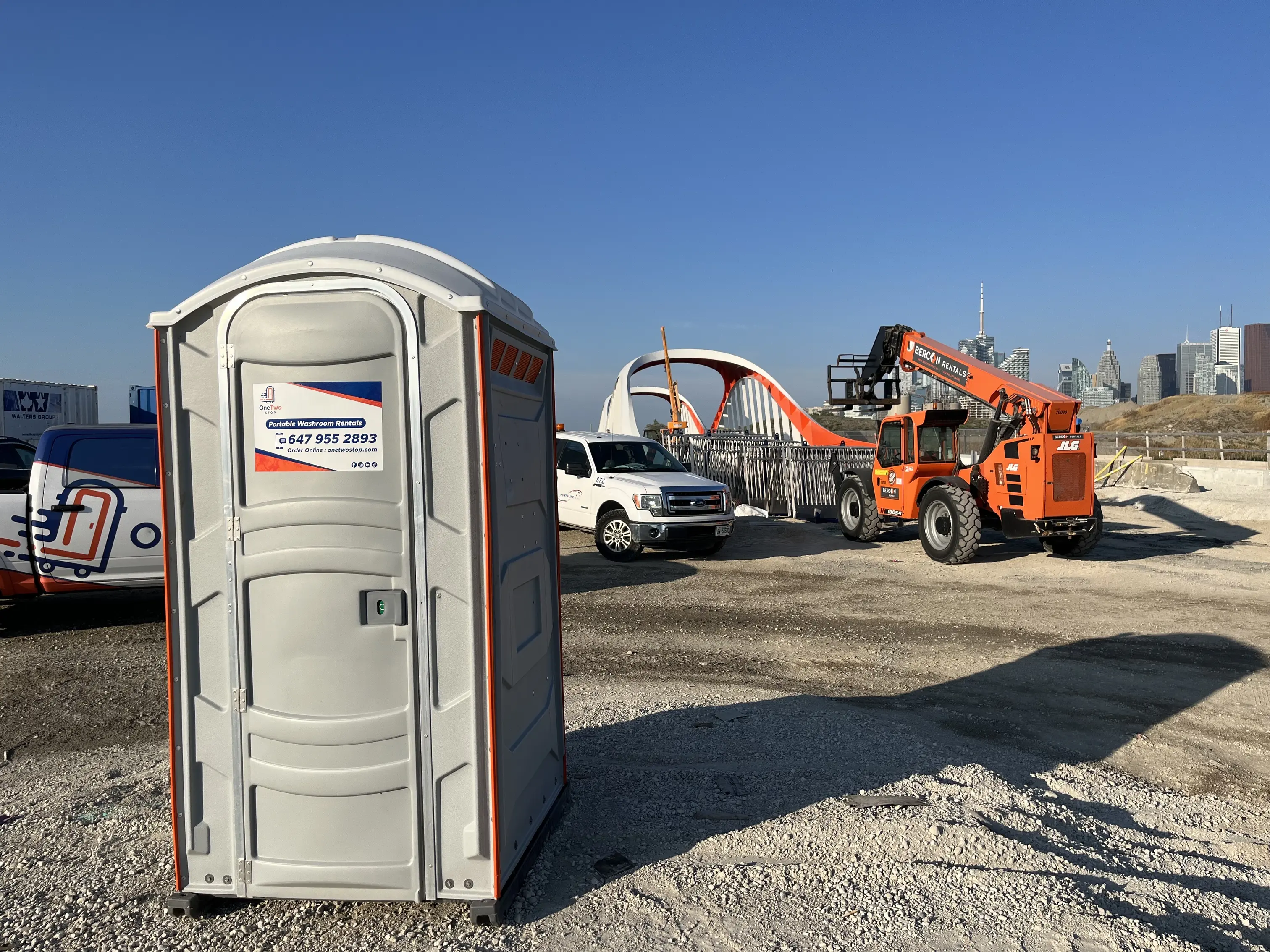
Setting up a new construction site is one of those things people don’t always think about—but trust me, it’s everything. I’m Brad Anderson, co-owner of OneTwo Stop, and I’ve been around enough muddy, hectic, half-finished job sites across Toronto to tell you that when setup goes wrong, the whole project suffers. So, let’s talk about site preparation—what it is, why it matters, and how to do it right.
Construction Site Setup: Key Takeaways
-
A well-executed site setup plan is critical for safety, efficiency, and compliance on any construction project.
-
Start with proper site surveying, soil analysis, and mapping of underground services before breaking ground.
-
Secure the perimeter early with hoarding, temporary fencing, and site access control to prevent unauthorized entry.
-
Install essential infrastructure like a site office, portable toilets, dumpsters, and utility connections before crews arrive.
-
Use storage containers and designate clear zones for materials, tools, and waste to keep the site organized.
-
Prioritize safety with emergency plans, first aid kits, fire extinguishers, and visible safety signage.
-
Run mandatory inductions, document training records, and hold regular toolbox talks to reinforce health and safety.
-
Before kickoff, walk the site with your site setup checklist to confirm equipment, resources, and scheduling are all in place.
-
A thoughtful setup isn’t just “pre-construction”—it’s the foundation for a smooth, productive, and safe build.
Construction Site Setup: What is Site Preparation?
It’s all the groundwork that happens before the building starts. And no, it’s not just about bulldozing some dirt and dropping off a dumpster. We’re talking about site surveying, soil testing, setting boundaries, and making sure utilities are where they need to be. Proper site set during this phase ensures that all aspects, including worker welfare and security measures, are addressed.
Site prep also includes grading the land, making sure drainage systems work, and putting in place erosion control if the weather turns nasty (and in Toronto, it will). Careful consideration in site preparation is crucial for ensuring safety and efficiency on-site. If the foundation’s off, everything else will be too. Prep is the difference between a project that moves and one that stalls.
Why is site setup so important?
Let me put it this way: a well-prepared site means fewer accidents, faster builds, and happier clients. It’s about:
-
Safety: Think signage, PPE, proper security, and safe working practices to prevent accidents. A messy site is a dangerous site.
-
Efficiency: If the materials storage area is two blocks away or your team doesn’t know where to park, you’re wasting time. Setup solves that.
-
Compliance: In Toronto, you must have the right permits to work, risk assessments, and things like the Construction Phase Plan on hand. If you skip the paperwork, you’re asking for a stop-work order.
Displaying key information such as safety documentation, training records, and necessary permits is crucial for compliance and ensuring safe working conditions.

What’s in a construction site setup checklist?
Here’s the good news: a strong checklist will save you headaches later. It includes everything from temporary toilets to site security systems like CCTV or even scaffold alarms for larger builds. It’ll also cover:
-
Utility connections (get that power and water sorted early)
-
Sanitation facilities (yes, that’s where our portable toilets come in)
-
Storage containers for tools and materials
-
A waste management plan (because trash piles up fast)
-
Emergency gear like fire extinguishers and a proper first aid kit
-
Insurance certificates (display employers' liability insurance certificate and make it accessible)
-
Induction forms (track training and ensure safety compliance)
When we deliver units to a new job site, I always ask: “Where’s your site register? Where’s your safety signage?” You’d be surprised how many folks forget these basics. But when you get them right from day one? The rest of the build just flows.
Bottom line: Good setup isn’t just a box to tick—it’s your foundation for success. It keeps your team safe, your project legal, and your schedule on track.
Planning and Pre-Site Assessment
Okay—imagine you’ve just arrived at your site. The coffee’s hot, the portable toilets are in place (you’re welcome), and your crew’s ready to go. But hold up—before anyone starts swinging a hammer, we’ve got a few critical steps to handle.
Planning a construction site isn’t just about logistics—it’s about preventing disasters before they happen. Effective site planning is a critical component of this process, enabling efficient organization and communication within the site office. And that starts with knowing exactly what you’re building on, and proving you’re allowed to build there in the first place.
Additionally, supporting worker welfare by providing adequate sanitation facilities and accommodations is essential for the well-being of the workforce and contributes to the overall success and safety of construction projects.
You wouldn’t build a house without looking at the land, right?
That’s where a site survey comes in. It’s the very first thing you need. A proper survey maps out the terrain—every slope, boundary, and quirk of the land. And trust me, Toronto lots love to surprise you. I once worked with a builder who found out halfway through the job that part of their fence was sitting on a neighbor’s property. That’s a stop-work order, plus an awkward conversation.
Once the land’s mapped, it’s time to get under the surface. Soil analysis tells you if the ground can actually support what you’re building. Clay-heavy soil? That needs extra drainage. Sandy ground? Might need more reinforcement. This isn’t just engineering jargon—it affects everything from foundation design to your grading plan and ensures the land can support the planned construction work.
And then there’s the wild card: underground services.
The scary stuff lives underground
You do not want to hit a gas line. Or a water main. Or electrical cabling. Trust me on this one.
Utility locates are a legal requirement and a life-saver—literally. Before you break ground, you’ve got to map every buried service line running across your site. This is usually done by calling Ontario One Call, but don’t assume that’s enough. Always double-check. Bring in a private locator if needed. The cost of caution is nothing compared to a site shutdown and a fine.
Identifying hazardous substances is crucial to prevent accidents during excavation.

Now let’s talk paperwork—because yes, it matters
Before you even think about pouring concrete, you’ll need a stack of documents. These aren’t just for your records—they’re legal requirements. And on any site I’ve visited, I can tell instantly who’s done their homework.
Here’s the short list of must-haves:
-
Permits to work – you need the city’s green light
-
A Construction Phase Plan – outlines how the work will be carried out safely
-
Your company’s Health & Safety Policy – required for all contractors in Ontario
-
Risk assessments for every major task
-
Training records – proof that everyone on site knows what they’re doing
-
Induction forms – track each team member's training and ensure awareness of safety protocols
-
Insurance certificates – display employers' liability insurance and other vital safety documents
I’ve walked onto jobs where everything looked great—gear’s in place, crew’s buzzing—but one missing document shut the whole thing down.
If you’re managing a site, keep these papers organized in your construction site office. Stick your H&S policy, risk assessments, and insurance certificates on the notice board. Make it visible. Make it routine.
Here’s the truth: most of the problems I see on job sites come from skipping this phase. Either someone assumed the land was fine or figured they’d “figure out the paperwork later.” That’s how delays (and fines) start.
Get the ground checked. Get the wires mapped. Get your docs in order.
Once all that’s done? Then—and only then—do you start setting up the real bones of your site.
Securing Access Control and Organizing the Site
You’ve done the legwork. The land’s mapped, the soil’s checked, and every utility is safely marked out. Permits? Posted. Safety plan? Printed and laminated like a champ. Now comes the part where things get real—physically real.
Because if planning is the brain of your project, then site security and organization? That’s the backbone. Without it, your entire site is a free-for-all, vulnerable to unauthorised access, which poses risks of theft, vandalism, and safety hazards.
Implementing robust safety measures is essential for safeguarding personnel and ensuring a secure work environment.
I learned that the hard way.
A few years back, we dropped off a set of portable toilets for a small residential build just east of downtown Toronto. Great crew. Super friendly. But when I arrived for the drop, I noticed there was no fencing. No locks, or security. Not even a single cone. I said, “You guys expecting a parade?”
They laughed. Two days later, someone did wander in—helped themselves to a few power tools and walked right out. That project spent the rest of the week chasing replacement gear. That’s why this next step matters so much.
First up: set your boundaries
This is job one on any site. You’ve got to build a secure perimeter—and it has to be more than just visual. I’m talking temporary fencing, hoarding panels, maybe even access gates with lockout control if it’s a high-value project.
If you’re working in the city, you’ve also got to think about protecting the public from potential hazards. Kids love building sites. So does the general public. A proper perimeter isn’t just about stopping theft—it’s about stopping accidents and minimizing risks associated with machinery, equipment, and falling objects.
Tip: Post your signage right at the entrance. Let everyone know this is an active construction zone and that access is restricted to authorized personnel only. That little sign can save you from a big lawsuit.

Then: organize who comes and goes
Once your boundaries are up, it’s time to manage site access control. This isn’t just about locking the gate at night—it’s about knowing who’s on site, when, and why. Even if it’s a small crew, having a site register and doing proper inductions for each member of the team makes a big difference.
For larger projects, consider swipe cards, coded locks, or monitored entry points. It sounds like overkill, but in Toronto, especially in dense areas, site theft is a real issue. I’ve had customers lose full dumpsters to after-hours scavengers.
Finally: lock it down with tech
If your tools are staying on-site overnight (and let’s be honest, they are), it’s time to think like a security guard. Install CCTV systems—even a few visible cameras go a long way in discouraging theft. Some companies use scaffold alarms or motion-activated lights. Others hire mobile patrol units to do drive-bys at night.
The goal is simple: create a site that’s too much trouble to mess with while ensuring easy access for legitimate operators and maintenance teams.
Make sure you’ve got:
-
Construction site security signage clearly posted
-
Backup power sources for alarms or surveillance if needed
-
Locked storage containers for tools and high-value gear
If you’re running a lean crew, these systems become your eyes when no one else is around.
Look, organizing your site isn’t just about stacking pallets neatly (though please, do that too). It’s about setting a clear tone: this site is protected, planned, and professional.
When everything has its place—and everyone knows the rules—you get a smoother build, fewer delays, and way fewer headaches.
Preventing Theft and Vandalism
Preventing theft and vandalism is a critical step in maintaining a secure construction site. Construction sites are often vulnerable due to the presence of valuable equipment and materials. Imagine arriving at your site one morning to find your tools missing and materials damaged—it’s a nightmare scenario that can set your project back days, if not weeks.
To prevent theft and vandalism, your construction site should be equipped with proper signage, security features, and access control measures. Start with the basics: clear, visible signs that indicate restricted access and the presence of security measures. This alone can deter opportunistic thieves.
Security guards and CCTV cameras are your next line of defense. A visible security presence can discourage unauthorized access, while cameras provide a record of any incidents. Regular site inspections and monitoring can help identify potential security risks before they become problems. Make it a habit to walk the site at the end of each day, checking that all equipment and materials are properly stored and secured.
A comprehensive checklist of security measures should be implemented to prevent theft and vandalism on the construction site. This checklist should include everything from locking up tools to ensuring that security systems are operational. And don’t forget to notify local authorities in case of any theft or vandalism incidents to ensure prompt action is taken.
By taking these steps, you can create a secure environment that protects your investment and keeps your project on track.

Essential Site Infrastructure
Alright—your perimeter’s locked down, the cameras are watching, and your safety signs are proudly declaring “No nonsense here.” So now what?
Now we make it livable.
Because a secure site is great, but if your crew doesn’t have a place to warm up, cool off, eat lunch, or go to the bathroom… you’re in for a long, miserable project. Ensuring the site is well-equipped with the right equipment is crucial for maintaining operational effectiveness and crew satisfaction.
Here’s a rule I live by: happy crews build better. And site infrastructure is what makes that happen.
Start with the heartbeat: your site office
Every job—big or small—needs a central hub. The construction site office isn’t just where paperwork goes to die. It’s a temporary but essential hub located directly on site, facilitating communication, management, and coordination of activities. It’s where the project manager works, where drawings are reviewed, and where problems get solved with a coffee and a bit of swearing.
Ideally, your office should be located close to the site entrance and well-connected to utilities. Make sure it has basic heating or cooling depending on the season (this is Toronto—prepare for both).
Next to that, you’ll want a break station. That’s your dry area—a clean, sheltered space for breaks, eating meals, and escaping the weather. No, a pickup truck cab doesn’t count. Your team needs somewhere clean, warm, and dry to recharge.
And don’t forget PPE storage. Keep spare helmets, vests, gloves, and eye protection on hand in the office. Someone will forget theirs.
The big three: toilets, dumpsters, and power
If I had a dollar for every time someone called us after their crew arrived to ask for portable toilets, I’d be retired by now.
Seriously, plan these ahead:
-
Portable toilets should be placed near the break area but not right beside it (trust me). We always recommend 1 unit per 7–10 workers for an 8-hour shift.
-
Dumpsters need a designated spot with clear access routes. Don’t block them in with materials or equipment—you’ll regret it come Friday clean-up.
-
And services and utility connections? These need to be carefully planned to ensure proper placement and functionality. Get them up and running early. You’ll need water, electricity, and potentially internet for site management tools or security systems.
Use temporary fencing around hazardous zones or to direct foot traffic around these key utility areas. Keeps things safe and organized.

Where’s the gear go?
Tool and material chaos is a productivity killer. I’ve seen it—guys wandering around for 15 minutes looking for a drill. That adds up.
Here’s what you need:
-
Storage containers: Secure, weather-resistant, and lockable. Perfect for tools, small equipment, and even PPE.
-
A materials storage zone: This should be flat, easy to access, and separated by material type (lumber, piping, concrete forms, etc.). It saves time and reduces damage.
-
Don’t forget about hazardous material storage, if applicable. Paints, solvents, or fuel? Keep ‘em secure, ventilated, and far from the lunchroom. Proper storage of hazardous substances is crucial to ensure safety on-site.
Everything should have a home—and everyone should know where that home is.
When your crew has what they need—portable toilets, clean dry break room, utilities, and organized storage—you get smoother days, fewer complaints, and real momentum on the build.
Next up, we’ll talk safety systems. Because once the site is built and buzzing, your biggest job is making sure everyone goes home in one piece.
Health and Safety
You’ve got your office humming, toilets fresh, and your storage dialed in—honestly, the site’s starting to feel like a well-oiled machine. But here’s the deal:
None of that matters if your people aren’t safe. Ensuring safety on-site means prioritizing personal protective equipment (PPE). Proper gear, including hard hats and safety boots, is crucial for worker protection, and additional protective items should be considered for specific tasks.
I always say this: infrastructure sets the stage, but safety keeps the show running. You can’t build anything if someone gets hurt, if work gets stopped, or if you’re chasing down a missed inspection with your insurance company breathing down your neck.
-
Make sure you have first aid kits readily available at every site office and accessible locations on larger projects. This ensures that first aiders can promptly assist casualties when needed.
Let’s start with the backbone: your safety systems
Every single site—whether it’s a 3-week reno or a 2-year commercial build—needs a proper emergency plan. Don’t overcomplicate it. Just make sure everyone knows what to do if something goes sideways. Conducting a thorough risk assessment is crucial to identify and mitigate potential hazards, ensuring safety and compliance.
That means:
-
Fire extinguishers—fully charged, inspected, and placed in clearly marked zones
-
A visible, stocked first aid kit—not one that’s been collecting dust under someone’s seat
-
A legit accident book—so incidents aren’t just “talked about,” they’re tracked and learned from
-
A posted emergency plan—clear evacuation routes, muster points, and emergency contacts
Proper signage is your silent supervisor
Never underestimate a well-placed sign. Safety signage keeps risks front-of-mind. Whether it’s a “PPE must be worn” notice, a “No unauthorized access” panel, or an arrow pointing to the fire extinguisher—this stuff does heavy lifting every day. Additionally, maintaining notice board health by displaying essential health and safety information, such as safety plans and legal posters, in communal spaces is crucial for promoting worker welfare and minimizing risks during construction activities.
Tip: Swap out damaged or faded signs right away. A melted safety sign halfway through winter doesn’t do anyone any good.

Don’t just talk safety—train it
Paperwork doesn’t protect people. Training does.
Make inductions mandatory. I don’t care if a guy’s been in construction for 20 years—every site is different. He needs to know your hazards, your workflow, your expectations. Keep it short, sharp, and site-specific.
Track everything in your training records. If something goes wrong, that’s your paper trail. No one wants to dig through their inbox during an inspection.
And don’t sleep on toolbox talks. These five-minute huddles are gold. Pick a topic—weather hazards, ladder safety, new gear—and keep your crew sharp. Use them to raise awareness of health and safety issues. It’s the small reminders that prevent big injuries.
Look, I’ve been around job sites long enough to know that safety is either your daily habit or your worst nightmare. The crews that stay safe? They’re not just lucky. They’re prepared.
They’ve got the right systems, the right training, and a crew that looks out for each other.
And that’s what this whole guide is about—setting up a site that runs smooth, builds fast, and brings everyone home safe.
Site Evacuation Procedures
Site evacuation procedures are an essential aspect of construction project safety. In the event of an emergency, construction workers should be able to evacuate the site quickly and safely. Picture this: a fire breaks out, and chaos ensues because no one knows where to go or what to do. That’s a scenario you want to avoid at all costs.
A site evacuation plan should be developed and communicated to all construction workers. This plan should cover emergency situations such as fires, natural disasters, and hazardous substance spills. It should include designated evacuation routes, assembly points, and emergency contact numbers. Make sure this plan is displayed prominently on the notice board in the site office, along with other important health and safety information.
Regular drills and training should be conducted to ensure that all construction workers are familiar with the site evacuation procedures. These drills can be as simple as a quick walk-through of the evacuation routes or as detailed as a full-scale mock evacuation. The key is to make sure everyone knows their roles and responsibilities in the event of an emergency.
Construction project managers should ensure that all construction workers are aware of the site evacuation procedures and understand their roles and responsibilities. The site evacuation plan should be reviewed and updated regularly to ensure that it remains effective and relevant. By doing so, you can ensure that your team is prepared for any emergency, keeping everyone safe and minimizing disruptions to your project.
Final Setup Checklist & Execution
This is the moment where your construction scheduling meets reality. Are your materials delivered and stored properly? Is your equipment operation-ready—fuelled, checked, and safe to use? Is the workforce fully briefed, inducted, and kitted out in PPE? A structured approach ensures everything is in place before starting work, breaking down the process into manageable steps for clarity and effectiveness.
If the answer to any of these is “not yet,” you’re not ready.
We once had a project delayed by three days because someone forgot to confirm delivery of a mini excavator. It was on the quote, but never booked. That’s why I recommend building this into your checklist:
-
Materials stored in designated materials storage area
-
All equipment fueled, functional, and placed correctly
-
Crew availability confirmed and scheduled
-
Training records, inductions, and documents complete

Walk it like a site manager
Take a walk. Seriously. Physically walk the entire site.
Use your Construction Site Setup Checklist like a map. Check every area, every system, every sign. Think like an inspector, a new hire, and yes—a worst-case-scenario person. Is everything where it should be? Do you see trip hazards, unsecured materials, or vague access points? Ensuring a well-planned construction site set is crucial for worker welfare, security measures, and compliance with health and safety regulations.
This is where the “little things” become big.
-
A missing bolt on a scaffold bracket
-
A portable toilet awkwardly blocking a pathway
-
A mislabelled breaker switch
-
An unplugged CCTV camera
You can catch all of these with one solid walk-through. And once it’s done? You’re greenlit.
This is your site’s Day One
Once everything on your construction site setup checklist is ticked off—really ticked off, not just “yeah we’ll get to that”—you’re ready to go live.
The excavation team shows up and they’re not guessing where to go. Deliveries know where to drop. The foreperson isn’t fielding questions about where the dumpster is or who forgot the safety signage. Everyone is briefed and ready to work safely, ensuring the crew can execute their tasks efficiently and in compliance with health and safety regulations.
Instead, your site hums.
And it didn’t happen by accident. It happened because you planned it like a pro.
Look, I’ve seen both ends of the spectrum. I’ve dropped toilets at sites that ran like clockwork—and at sites that felt like herding cats in a windstorm. The difference wasn’t budget. It was the setup.
You’ve now got the blueprint to build smarter, safer, and smoother. So whether you’re a first-time site supervisor or a seasoned GC who just needed a solid reminder—you’re ready.
Now go build something great. And hey—don’t forget to book the toilet.
Site Inspection and Monitoring
Site inspection and monitoring are critical components of construction site safety. Regular site inspections should be conducted to identify potential safety hazards and risks. Think about the dangers of falling objects, heavy machinery, and confined spaces—these are just a few of the hazards that can be present on a new construction site.
Site monitoring should include regular checks on equipment, materials, and construction worker activities to ensure compliance with safety procedures and regulations. Construction project managers should conduct site inspections and monitoring to identify areas for improvement and implement corrective actions. This proactive approach can prevent accidents and keep your project running smoothly.
Site inspections and monitoring should be documented, and records should be kept on file for future reference. This documentation can be invaluable in the event of an incident or inspection by regulatory authorities. Construction workers should be encouraged to report any safety concerns or hazards to their supervisors or project managers. This open line of communication can help address issues before they become serious problems.
Site inspections and monitoring should be conducted in accordance with the health and safety plan, and any issues or concerns should be addressed promptly. The results of site inspections and monitoring should be used to update the health and safety plan and improve overall site safety. By making site inspection and monitoring a regular part of your routine, you can create a safer, more efficient construction site.
Conclusion
You’ve walked the site. You’ve ticked the boxes. And the crew’s ready to roll. Feels good, doesn’t it?
But before you shift into build mode, let’s zoom out one last time.
Let’s recap the mission-critical steps:
-
You kicked things off with planning and pre-site assessment—scanning the land, testing the soil, mapping underground services, and getting your permits to work in place.
-
Then you moved on to securing and organizing the site—hoarding, fencing, site access control, and layered construction site security systems that keep both people and materials protected.
-
From there, you laid the foundation with essential infrastructure—portable toilets, storage containers, and reliable utility connections that keep the crew comfortable and the tools powered.
-
You wrapped it in a bubble of readiness with safety systems—your emergency plan, first aid kit, fire extinguishers, and good ol’ toolbox talks that keep your team sharp and safe.
-
And finally, you pulled it all together with a real-deal construction site setup checklist—a walk-through, a resource check, and a final sign-off that told the whole team, “we’re ready.”
Now, look—I’ve seen what happens when people skip these steps. Best case? Delays and stress. Worst case? People get hurt, fines come flying in, and the whole project spirals. No one wants that.
But when you take setup seriously?
You build trust. You build momentum. You build a site that works.
And as someone who’s delivered more toilets than I can count to jobs that went both ways, I’ll tell you straight: the ones that nailed setup? They nailed everything else too.
Ensuring compliance and readiness for a potential health and safety audit is crucial. Proper setup not only keeps your team safe but also ensures you’re prepared for any regulatory checks.
And when it’s time to order your site services? Give us a call. OneTwo Stop’s got your back—from the first delivery to final clean-up.
See you on site.
A construction site setup checklist includes site survey, soil analysis, permits to work, temporary fencing, storage containers, welfare facilities, portable toilets, utility connections, and safety systems like fire extinguishers and emergency plans.
A secure perimeter using hoarding, fencing, and site access control helps prevent theft, protect the public, and ensure only trained personnel enter. It supports construction site security, safety signage compliance, and efficient traffic flow on-site.
Key health and safety documents include the H&S policy, risk assessments, the construction phase plan, training records, method statements, permits to work, and toolbox talks. These ensure site compliance and worker safety from day one.
Portable toilets, dry areas, and welfare facilities should be installed before construction begins. Early setup supports worker hygiene, PPE compliance, and aligns with regulatory standards for temporary services on construction sites.
Plan utility connections during the pre-site phase. Conduct utility locates to map underground services, ensure safe trenching, and coordinate with providers. This avoids costly delays and keeps your services and utility connections on schedule.

About The Author
Brad Anderson is a seasoned expert in the porta potty industry with over 6 years of hands-on experience. He is the co-founder of OneTwo Stop, a leading porta potty rental company based in Toronto, Ontario. He also serves on the board of OASIS, which advocates for best practices in the waste disposal and portable sanitation industries. Brad has been deeply involved in every aspect of the business—from delivery and setup to cleaning, sanitization, and maintenance. His firsthand knowledge of portable sanitation solutions makes him a trusted authority on the subject.
With a passion for providing clean, reliable, and efficient portable washrooms, Brad understands the challenges and best practices in the industry better than most. Whether it’s serving construction sites, outdoor events, or emergency situations, he knows what it takes to ensure comfort and hygiene for users. He shares his insights, tips, and expertise to help customers make informed decisions about their portable restroom needs.
